Improper Challenge of Accepted Procedural Law Application by Trademark Infringers
Jul 14, 2026
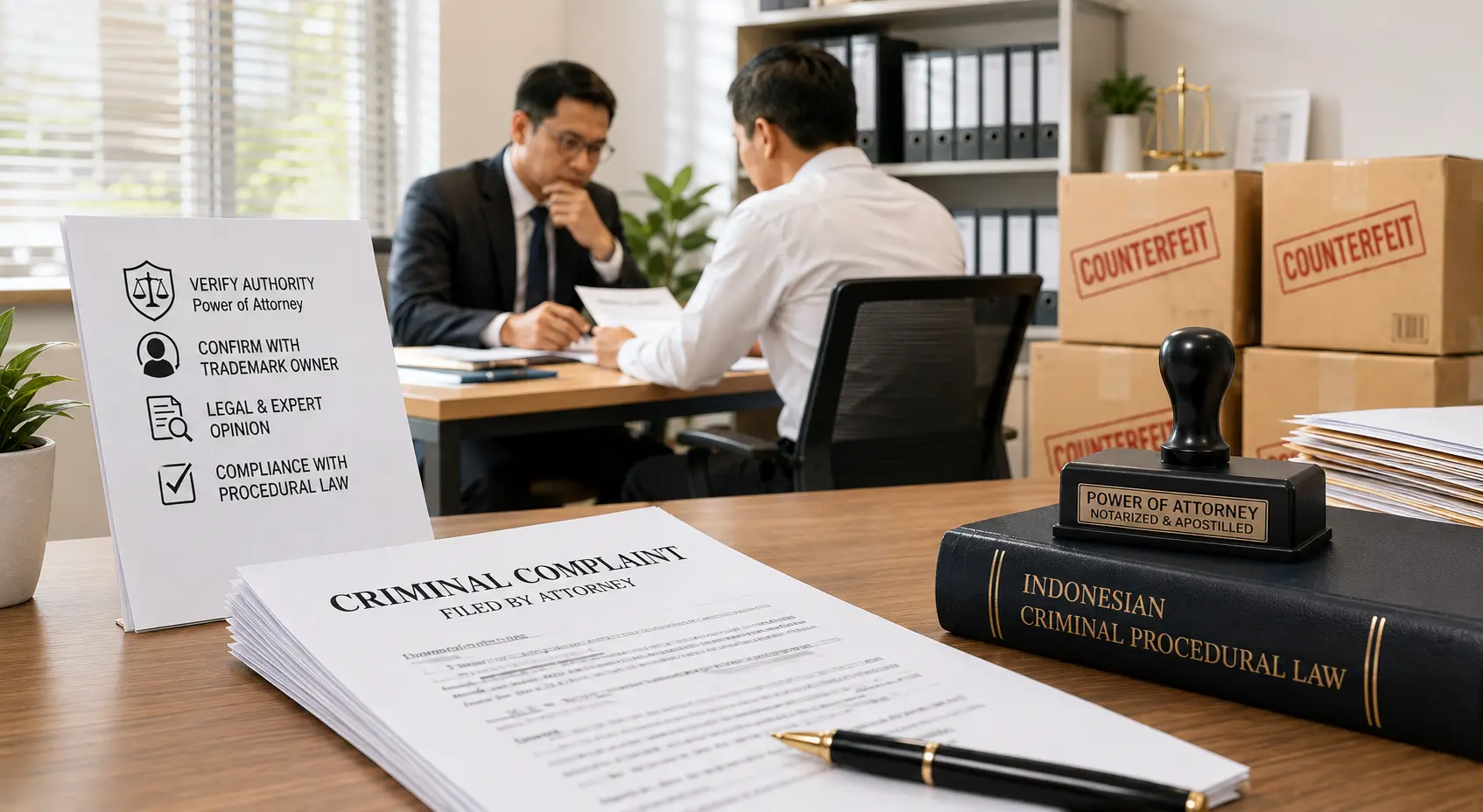
Over the past three years, trademark owners have significantly intensified their efforts to combat the distribution of counterfeit goods in Indonesia. Such enforcement initiatives have been undertaken not only by foreign companies that are selling their products in Indonesia without rights, but also by the Indonesian companies that are increasingly proactive in protecting their trademark rights.
In practice, one of the legal measures pursued by trademark owners against trademark infringement is by way of filing of a criminal complaint with the Law Enforcement Agencies. Traditionally, the complaint will be submitted by trademark owner's in their respected countries by their local attorneys in the countries where the infringement has occurred.
However, as trademark infringers have become more familiar with procedural aspects of trademark enforcement, reported parties have increasingly challenged the validity of complaint letters signed by the legal attorneys representing the trademark owners. Their argument is that trademark offences constitute a complaint-based on offences that therefore, the complaint should be filed directly by the trademark owner as the aggrieved party and not by their legal law attorneys. Such objections are often on the premised that the Indonesian Trademark Law does not intrinsically stipulate whether or not the legal attorney is authorized to file a criminal complaint on behalf of the trademark owners. Such issue commonly a raised from cases that involve foreign trademark owners. In practice, although the legal counsel has been granted the Power of Attorney that has been notarized and apostilled in the country of origin, the infringers nevertheless continue to try to challenge the formal competency of the complaint. It seems that such objections are frequently used to as a strategy to contest the criminal report and to delay or complicate the investigation process, despite the existence of properly legalized authorization documents.
Furthermore, Indonesian Criminal Procedural law generally recognizes that procedural rights can be exercised through their appointed legal attorneys acting under a valid Power of Attorney. In practice, the filing of criminal reports and complaint-based offences by legal attorneys has long been accepted, particularly where the aggrieved party is a legal entity or a foreign trademark owner with no physical presence in Indonesia.
In response to the improper objections by the infringers, law enforcement authorities have adopted a more cautious approach by frequently seeking opinions from criminal law and/or trademark experts, as well as obtaining direct confirmation from trademark owners, to verify that complaint letters filed by legal attorneys are valid and submitted with the owner's knowledge and consent. This practice reflects an increasing emphasis on ensuring compliance with procedural requirements from the perspective of the prevailing law in Indonesia, alongside establishing the substantive elements of infringement, in order to minimize challenges that may hinder the investigation and prosecution of trademark infringement cases. (FBK/MLA)

