Indonesia’s Return to Priority Watch List: An Alarming Matter in Intellectual Property
May 06, 2026
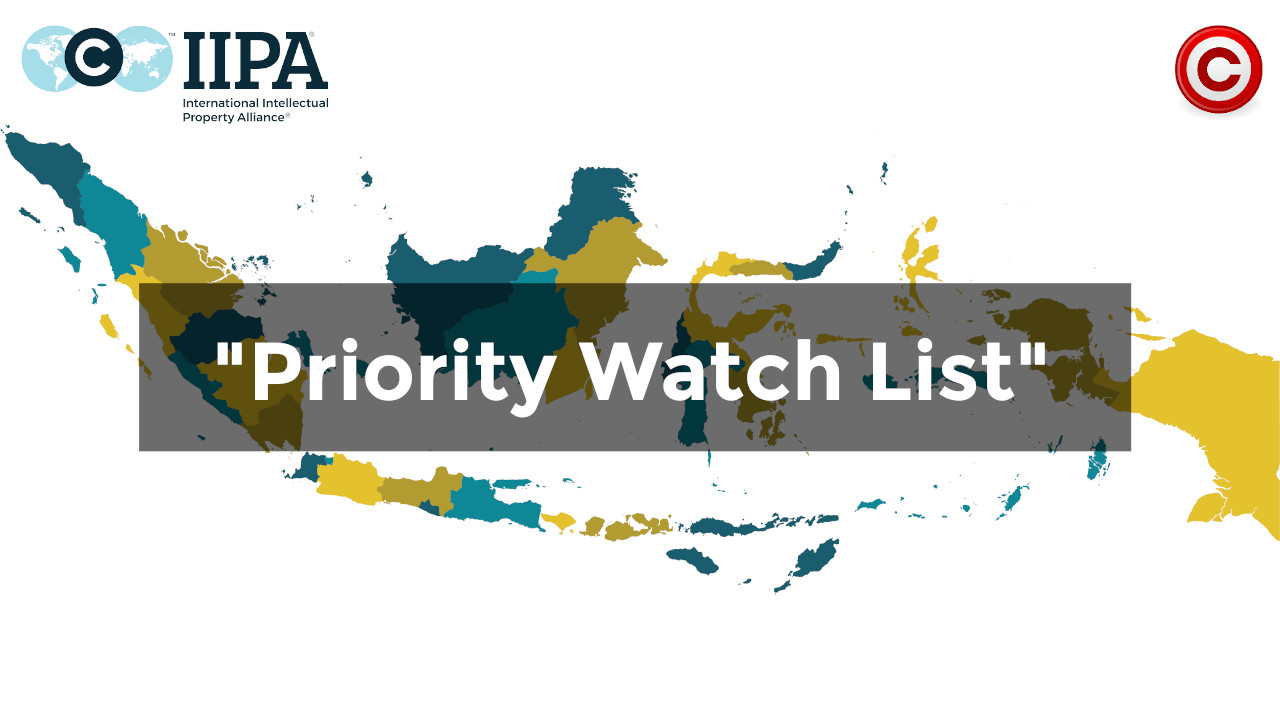
JAKARTA: 30th April of 2026, the United States Trade Representative (USTR) has released the annual Special 301 Report, a global evaluation to the protection and enforcement of Intellectual Property in more than 100 countries commercially partnered to the United States of America.
According to USTR’s Press Release, in this newest report, unfortunately, Indonesia have once again returned to the listing within Priority Watch List (PWL) alongside with Chile, China, India, Russia, and Venezuela. This marks Indonesia’s continued presence within PWL for more than a decade, approximately 14 years, signifying the still unsolved dilemma within the structures of Indonesian Intellectual Property protection and enforcement.
Within the framework of the Special 301 mechanism, several key categories serve as the primary benchmarks for assessment, including: Priority Foreign Country (PFC), the most severe category, can leads to trade sanctions, while Priority Watch List (PWL) is treated as a serious concern and receives incredible pressure from United States governments. Nation that entered these categorizations are considered to have a significantly flawed Intellectual Property protection and enforcement.
The most significant shortcomings identified in prior reports relate to piracy and counterfeiting. Indonesia has been assessed as continuing to experience high levels of digital piracy (including films, music, and software), as well as a widespread circulation of counterfeit goods, which has increasingly shifted to online platforms.
The primary issue does not lie in the regulatory framework, but rather in weak and inconsistent enforcement, coupled with a limited deterrent effect. As a result, despite the existing legal regime, its implementation remains suboptimal. Border control challenges have also been highlighted, with counterfeit goods still being imported and difficult to detect at ports and through e-commerce platforms
Does this mean Indonesia performs poorly in intellectual property protection? The honest answer is not entirely black and white. While underlying structural issues remain, the broader context must also be considered. The USTR’s assessment reflects U.S. economic and industrial interests, and through such evaluations, the U.S. is able to exert pressure in bilateral negotiations, often linking intellectual property issues to market access.
That said, the concerns raised cannot be disregarded. Persistent high levels of piracy and counterfeiting, coupled with gaps in protection and enforcement, continue to influence investor perceptions and may position Indonesia as a higher-risk jurisdiction for intellectual property, intensive investments.
Indonesia’s re-admission to the USTR Priority Watch List in 2026 is therefore not merely procedural, but a clear signal that intellectual property challenges in the country remain serious and recurring. (FBK/BDP-su)